










The Heartbeat of Great Teams
My life is a conglomeration of teams. During every day at Lessonly, every project at Michigan Ross, and every moment in-between with my family, I’m part of a team.
It’s easy to see inherent value of a great team; when I’m good at X, and you’re good at Y, together we accomplish more. Countless studies show that specialized and diverse teams are economically and ideologically advantageous. As we challenge one another and work together, the final product improves.
But too often, ego gets in the way of effective collaboration. Self-interest is the human default, leaving us more invested in personal gain than the success of the team. We become overly concerned with recognition, rather than contribution.
This jockeying for personal gain or appreciation is the single greatest barrier to wholehearted collaboration. That’s why I’m convinced that the prerequisite for a truly great team is humility.
…
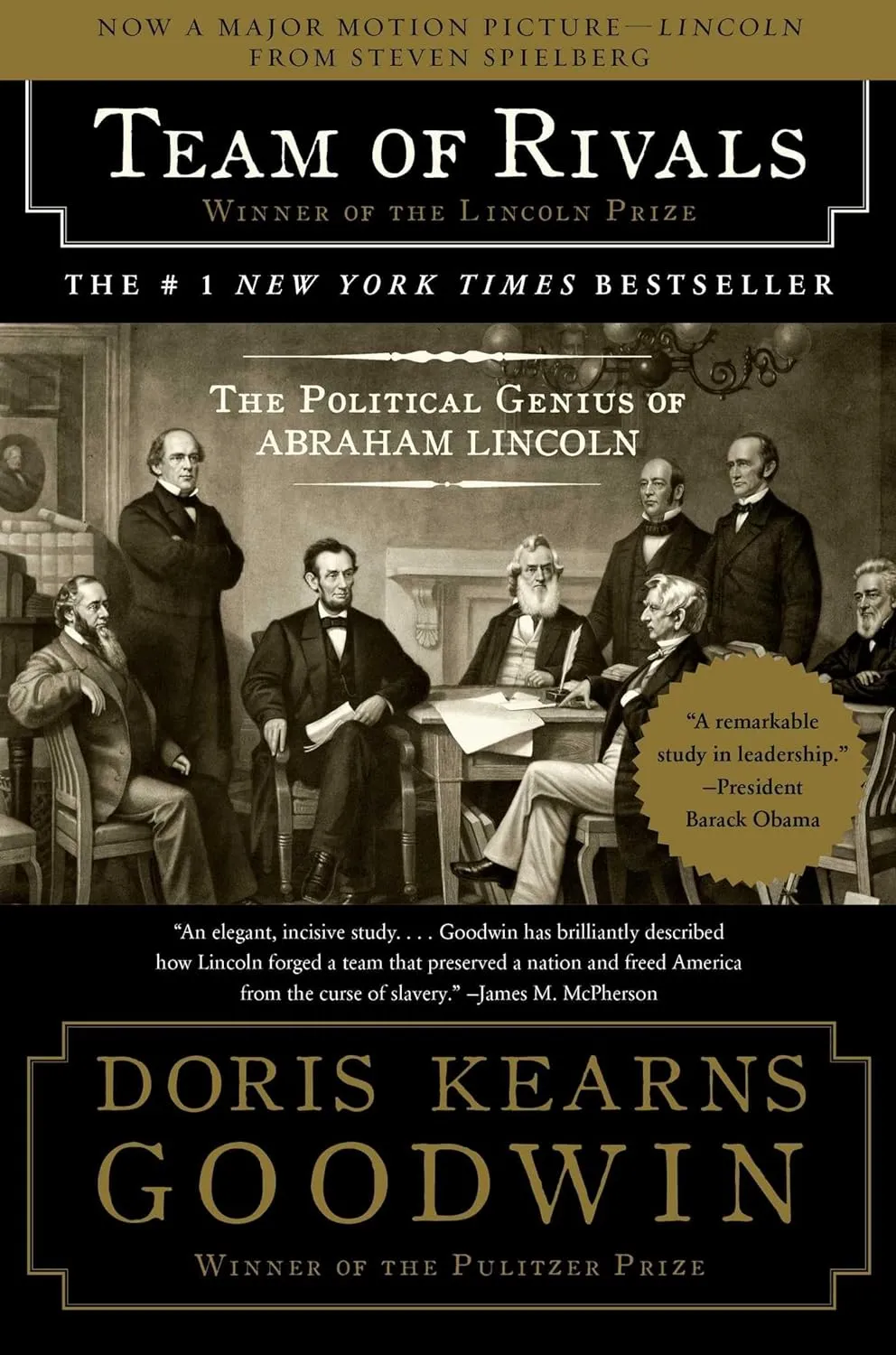
One of my favorite books of all time is Team of Rivals, the groundbreaking Lincoln biography by Doris Kearns Goodwin. Lincoln, a relatively inexperienced Congressman, defeated experienced political giants William H. Seward, Salmon P. Chase, and Edward Bates for the presidency. He turned around and requested that each of these former rivals serve in his cabinet, as Secretary of State, Secretary of the Treasury, and Attorney General, respectively. Together, they led America through the turbulent years of the Civil War and reunited the country.
It took enormous humility for Lincoln (as well as Seward, Chase, and Bates) to work together with this cadre of rivals. I recently read an interview with Goodwin that highlighted how Lincoln’s humility cultivated a better team:
**Lincoln humbly defined reality—**Lincoln had the self-knowledge to know that he couldn’t succeed alone, and the objectivity to look beyond rivalry to see capability. “[Lincoln’s] explanation at the time was that these were the strongest men in the country. He declared that at a time of peril, the country needed to have the strongest men, and that he couldn’t deprive it of those talents…By putting his rivals in his cabinet, he had access to a wide range of opinions, which he realized would sharpen his own thinking…It took an enormous amount of self-confidence.”
**Lincoln cared about others—**Goodwin notes, “A set of emotional strengths was the foundation of Lincoln’s political genius. He understood that human relations are at the core of politics and that if you deal with people in the right manner, you are going to be able to work effectively with them. The qualities we associate with human greatness—such as sensitivity, empathy, compassion, kindness, honesty — are also keys to political success.” At the root of Lincoln’s emotional intelligence was the humble willingness to honestly care about people. By doing so, he won their trust, loyalty, and hard work.
Lincoln didn’t seek praise — One psychiatrist noted that, “Lincoln was supremely relaxed about being outshone by those around him.” When Ulysses S. Grant visited the White House in 1864, Lincoln offered Grant and the place of honor at reception—usually reserved for the president. He knew that Grant enjoyed the limelight of celebration, and Lincoln was humble enough to stand on the side.
Lincoln admitted his faults—“When something went well, Lincoln always shared the credit. When something went wrong, he shouldered his share of the blame. When he himself made a mistake, he acknowledged it immediately.” In another instance with Grant, Lincoln had doubted the general’s strategy—but it played out beautifully. Lincoln quickly admitted, “I now wish to make the personal acknowledgment that you were right, and I was wrong. I frequently make mistakes myself, in the many things I am compelled to do hastily.”
…
What I’m learning is that the most world-changing collaboration happens when humility is rampant. And humility isn’t reserved for the leader alone. When every member of the team is focused on the success, well-being, and empowerment of their teammates — rather than on receiving recognition — the best ideas and results rise to the surface.
Paradoxically, the best way to accomplish amazing things on a team isn’t being amazing: It’s being humble.
It’s worth noting that ambition isn’t antithetical to humility. Lincoln wrote to his friend Joseph Hooker, “You are ambitious, which, within reasonable bounds, does good rather than harm.” Goodwin notes the contrast in ambition between Lincoln and Salmon Chase, “The nature of [Lincoln’s] ambition…was different from that of his rivals. Chase, for example, simply wanted position and power. He wanted to be President for the sake of being President; he needed that office to feel complete. Lincoln’s ambition was both larger and more interesting. He wanted to accomplish something that would stand the test of time.”
If your team wants to do something that matters—something that stands the test of time—choose humility.